
Why study Geology?
Geology (Greek geo = Earth, logos = science) studies how the Earth formed, what it is made of and how it changes — from crystals thinner than a hair to mountain ranges and the planet's 4.6-billion-year history.
What a geologist does
- Maps the ground and reads the history written in rocks.
- Finds and assesses resources: water, minerals, oil, gas, geothermal energy.
- Protects the environment and follows natural hazards: landslides, earthquakes, pollution.
- Analyses rocks and minerals in the lab: microscope, Raman spectroscopy, XRF.
- Makes safe construction possible: foundations, tunnels, dams, roads.
In the field, in the lab, in industry
Like being outdoors? Geologists spend much of their time in the field — mapping, sampling, monitoring — and the rest in modern laboratories. Geology is one of the few careers where the office is often outside.
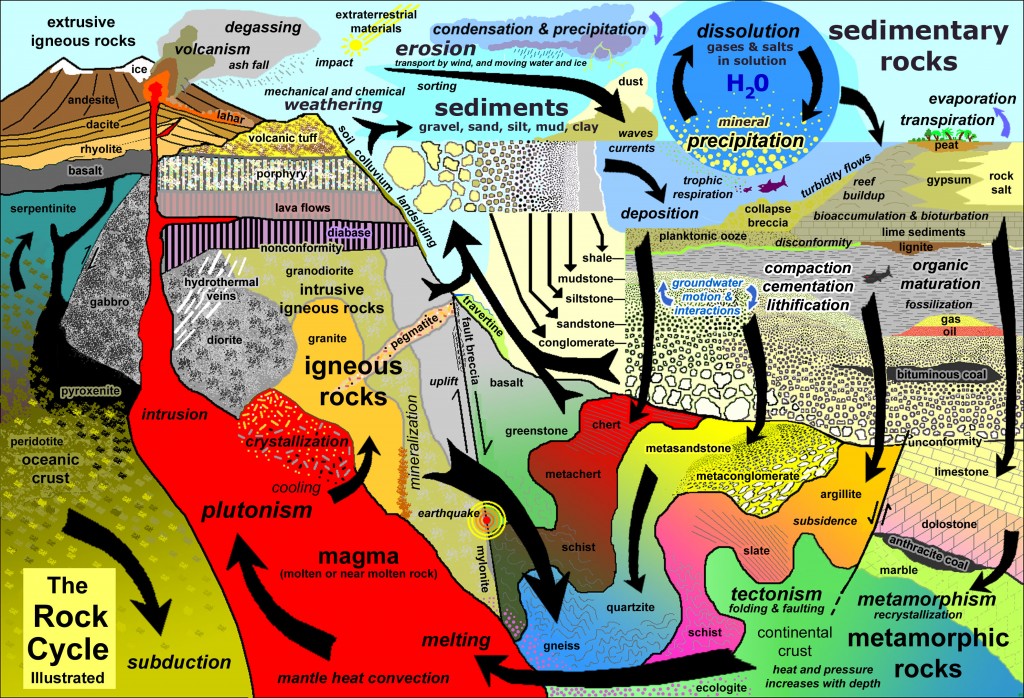
Fields of geology
Mineralogist · petrologist · geochemist · palaeontologist · stratigrapher · hydrogeologist · geophysicist · wellsite geologist · geotechnical engineer · gemmologist · environmental geologist · geochronologist — and more.
