Skip to content Orar 2026 · semestrul 1
Department of Geology
Search RO — Română

Since 1863 · Alexandru Ioan Cuza University of Iași

Your adventure starts with us!

The Department of Geology trains geologists and geological engineers in the field, in the lab and in industry — for over 160 years.

1863
founded
50+
employers
5
BSc and MSc programmes
20,000+
rock, mineral and fossil specimens in the collections

Scroll to drill

1 / 151

v26.9.28-4 · Developed by Andrei Ionut Apopei

▼ 45 m · event

Water table

At 45 m the pores of the sand are full of water: we are in the aquifer. Hydrogeologists study how fast it recharges and how clean the water is.

▼ 45–300 m Alluvium: gravel and sand · Quaternary · 2.6 Ma

Latest news

All news
Events

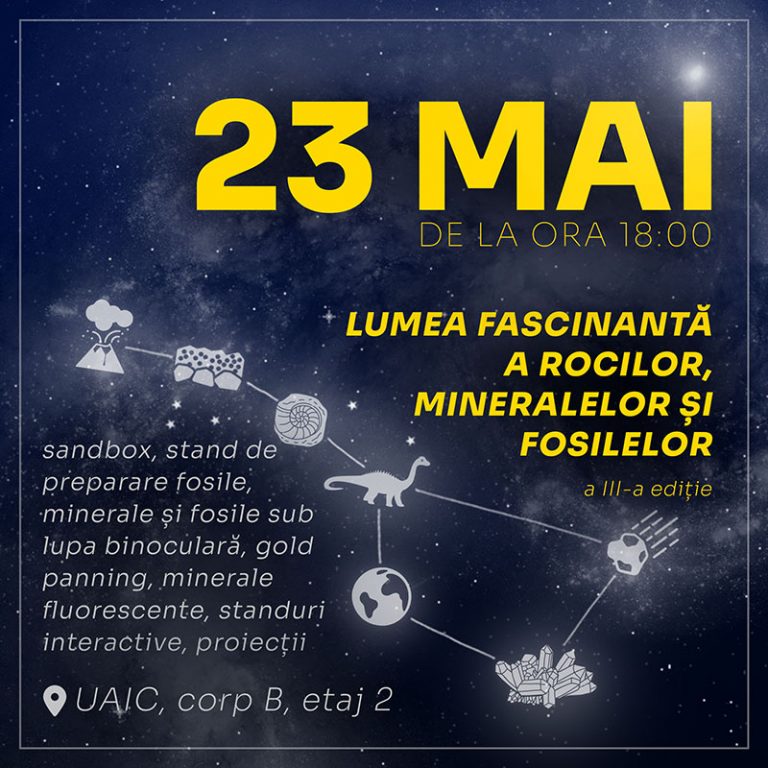
Noaptea Muzeelor la Geologie (2026)

Sâmbătă 23 mai, începând cu ora 18:00, sunteți așteptați la evenimentul „NOAPTEA MUZEELOR LA GEOLOGIE” ce are loc în cadrul colecțiilor de Mineralogie și Paleontologie de la Facultatea de Geografie și Geologie…

Read
ROCK THAILAND GEO COMPETITION

ROCK THAILAND An academic quest of the Earth beneath the beauty Synopsis Given the advantages of modern communication and data availability, we propose a multidisciplinary and…

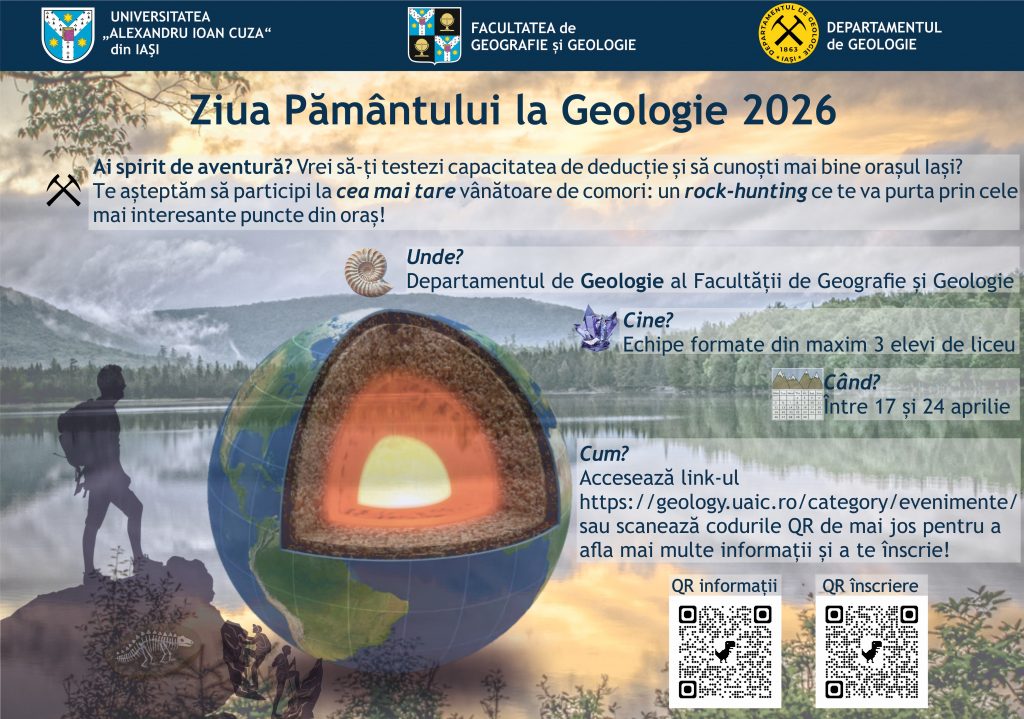
Ziua Pământului la Geologie 2026

Departamentul de Geologie al Facultății de Geografie și Geologie din cadrul Universității „Alexandru Ioan Cuza” din Iași organizează a treia ediție a evenimentului-concurs Ziua…

▼ 300–650 m Clays and marls · Neogene (Sarmatian) · 12 Ma

Recent events

All

Calendar

  • Department
  • International day
  • Admission
  • Other

Coming up

▼ 650–800 m Volcanic tuffs (Dej Tuff) · Neogene (Badenian) · 15 Ma

The geology under your feet

Click the map ↓

© OpenStreetMap · Macrostrat (CC-BY 4.0)

The geological map of the world (1:5M) over OpenStreetMap. Click anywhere on the map to find out which rock unit is there: its name, age and lithology.

GeoloGIS

The GeoloGIS platform: the geological maps of Romania (1:200,000 and 1:1,500,000), critical minerals, mineral occurrences and more than 900 3D models of rocks and minerals from our collections.

Explore in GeoloGIS

▼ 800 m · event

A fossil in the cuttings

Among the rock chips brought up by the drilling mud there is a Nummulites — an index fossil. We now know we are in the Eocene, about 45 million years ago.

▼ 800–1100 m Sandstones · Paleogene (Eocene) · 45 Ma

Bachelor and Master, with field work from year one

Bachelor

  • Geology – Geochemistry

    BSc in Geology

    3 years
  • Geological Engineering

    Engineering degree

    4 years
  • Geological Engineering – Bălți branch

    Engineering degree

    4 years

Master

  • Environmental Geochemistry

    MSc

    2 years
  • Wellsite Geology

    MSc

    2 years

Admission 2027 (in Romanian)

Ask Petrică, our admission assistant, or read everything on geologie.ro.

geologie.ro

▼ 1100 m · event

Core recovered

We stop and cut a core: an intact cylinder of rock, 9 m long. In the lab we measure its porosity, permeability, mineralogy and chemical composition.

▼ 1100–1500 m Flysch: sandstone–shale alternations · Cretaceous · 100 Ma

Ten reasons to study Geology in Iași

  1. 01

    A recognised degree

    In Geology or Geological Engineering, valued in Romania and abroad.

  2. 02

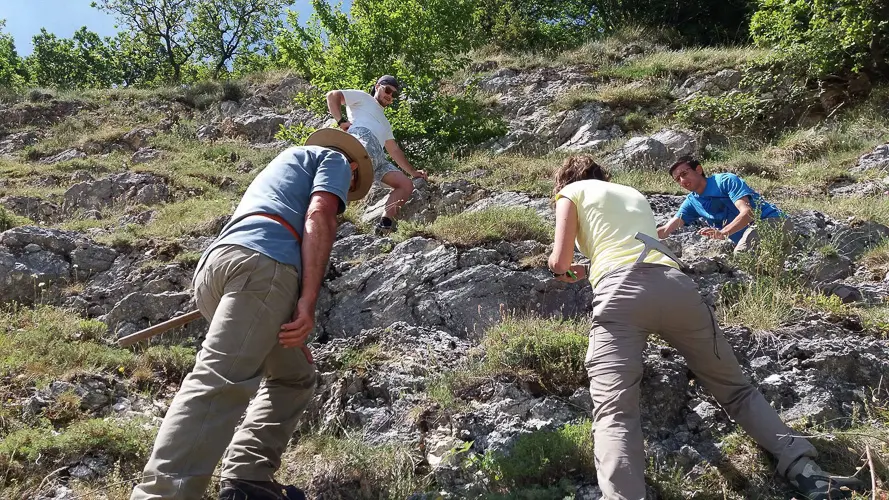
    Field work

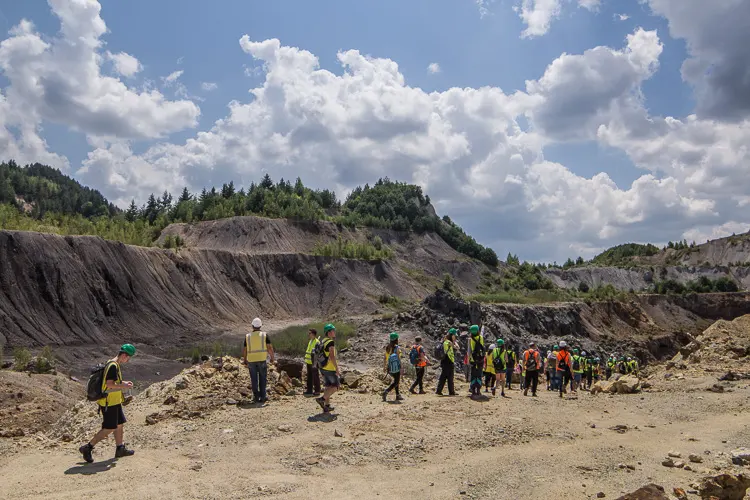
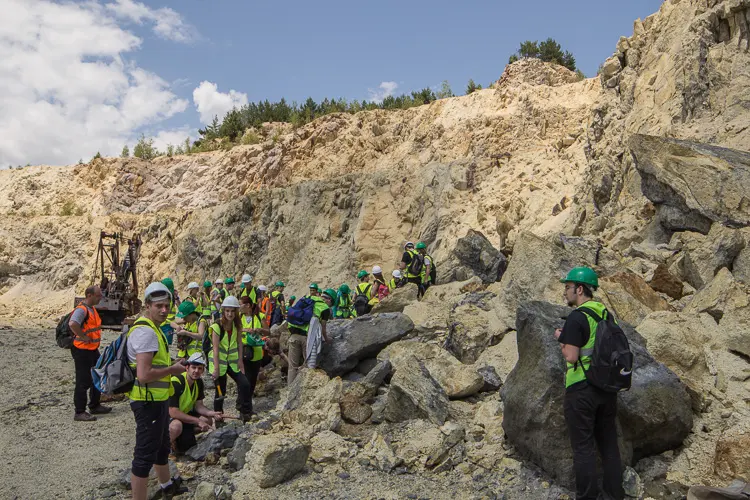
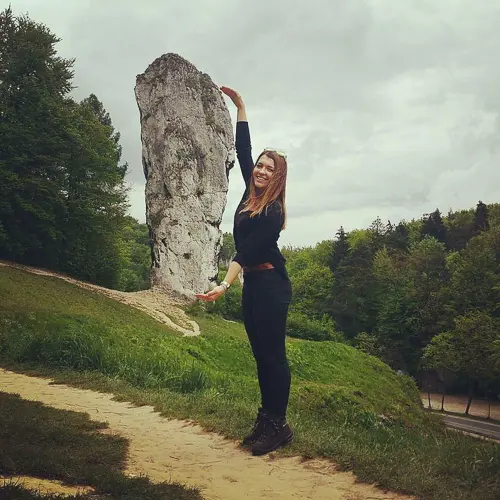
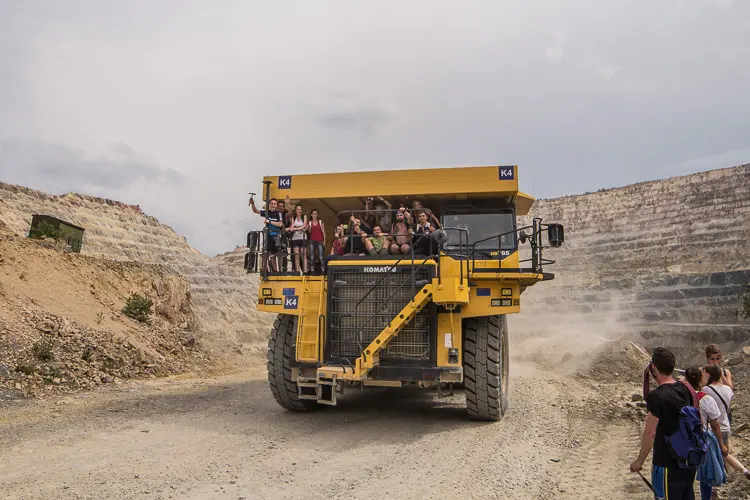
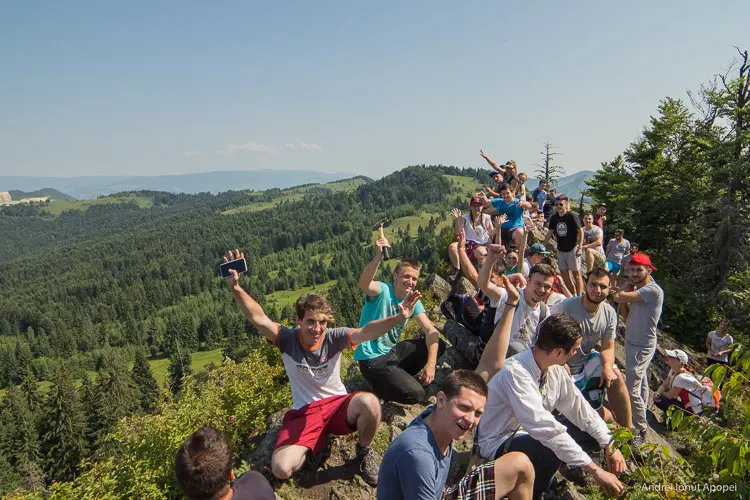
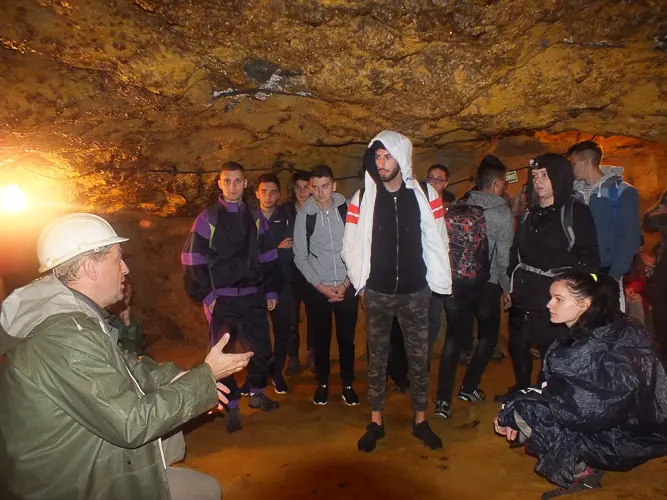
    In the Eastern Carpathians, the Apuseni Mountains and Maramureș.

  3. 03

    Student field trips

    The Mud Volcanoes, Piatra Craiului, Sărata-Monteoru, Rarău, Racoș, Ghindari.

  4. 04

    Tradition

    One of the oldest programmes in the country, since 1863.

  5. 05

    Internships

    With national and international companies.

  6. 06

    Modern laboratories

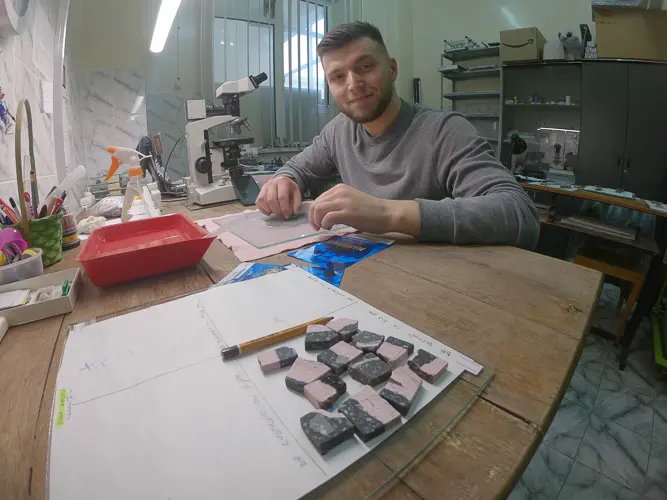
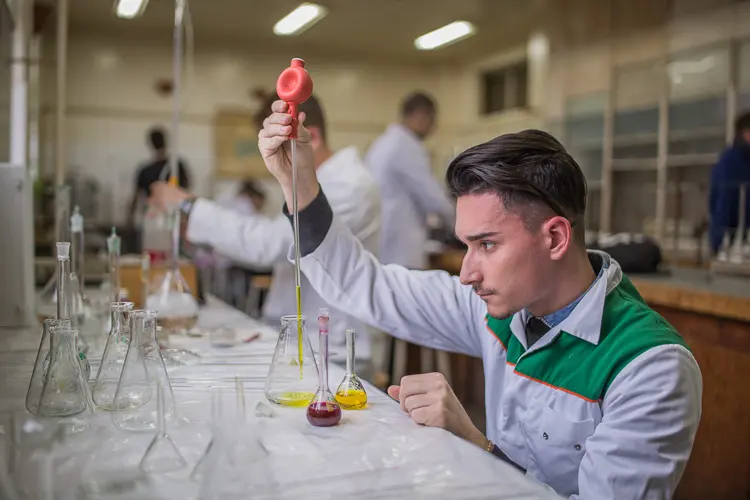
    Microscopes, Raman and XRF spectroscopy, workstations, professional software.

  7. 07

    Erasmus+

    Mobilities in Portugal, Spain, France, Italy, the Netherlands, Norway and more.

  8. 08

    Professional societies

    AAPG and SPE student chapters.

  9. 09

    Student life

    Camps, symposia, Museum Night, Earth Day.

  10. 10

    Jobs

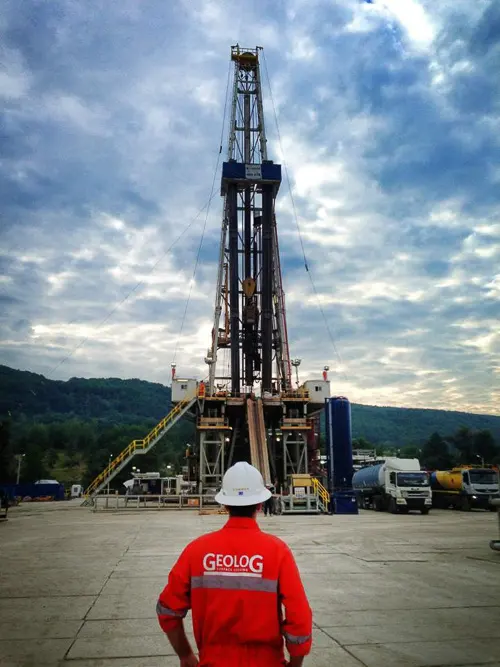
    SLB, OMV Petrom, Geolog, Daflog, Shell, ANPM, ANRE, Arcadis, Delgaz, IGR and more.

▼ 1300 m · event

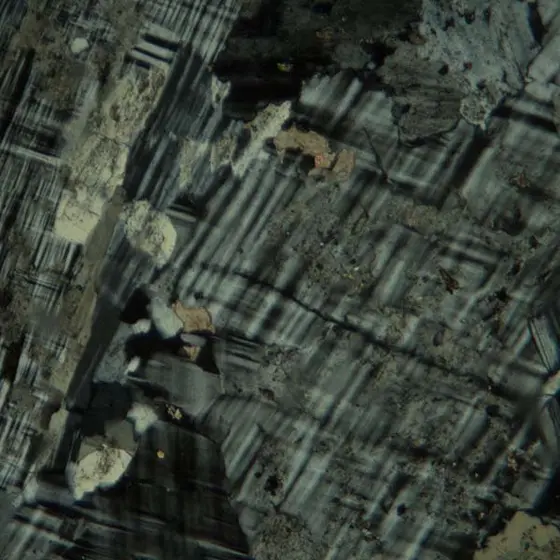
Thin section

From the core we cut a slice of rock, grind it down to 30 microns (0.03 mm) and look at it under the petrographic microscope. With crossed polars, quartz and plagioclase show first-order interference colours (grey, white, straw yellow) and go dark four times in a full turn of the stage; plagioclase is recognised by its polysynthetic twinning. That is petrography.

▼ 1500 m · event

We crossed a fault

The drilling mud starts to disappear into fractures: we have crossed a fault. On either side of the fault plane the layers are offset by tens of metres — structural geology reconstructs the displacement.

▼ 1500–1900 m Limestones · Jurassic · 160 Ma

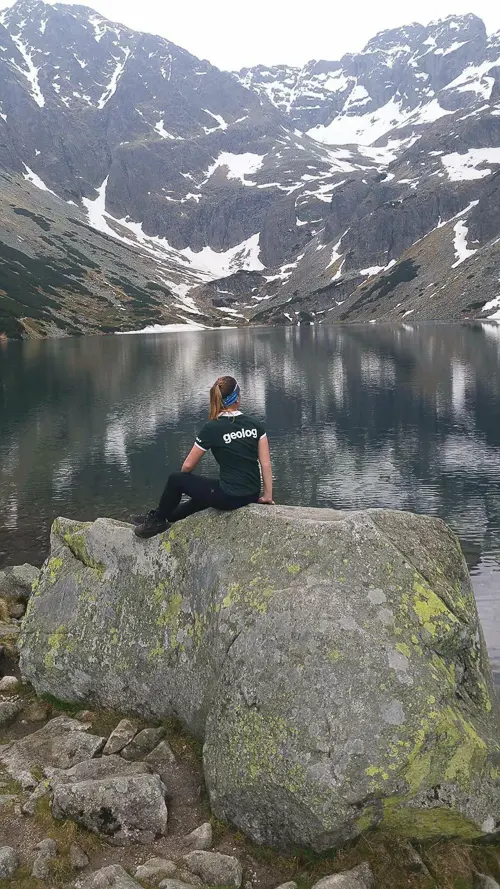
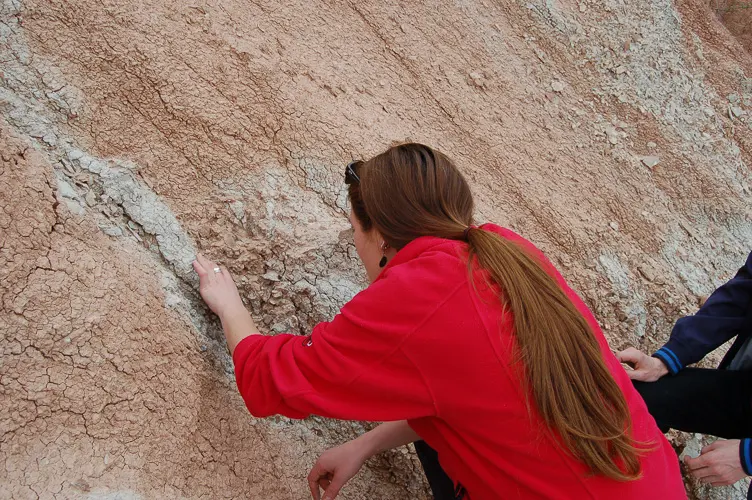
In the field, in the lab, on the rig

▼ 1900 m · event

It gets hotter

Every 100 m the rock is about 3 °C warmer (the geothermal gradient). At 1900 m the bit works at almost 70 °C.

▼ 2250 m · event

Gas show

The gas detector jumps: the black shales are source rocks, rich in organic matter. The mud weight is increased for safety.

▼ 2250–2650 m Black shales · Paleozoic (Carboniferous) · 320 Ma

Our graduates work at

Career opportunities

Our graduates at work

Each dot on the borehole is a graduate: the older the class, the deeper it sits. Click one to see where they work.

▼ 2450 m · event

Hydrothermal vein

The bit passes through a vein: hydrothermal fluids flowed through the fractures and deposited gangue minerals (quartz, calcite, barite, etc.) with galena, sphalerite, chalcopyrite, pyrite, etc. This is how ore deposits form — lead, zinc, copper or gold.

▼ 2650 m · event

Oil traces under UV

Under the ultraviolet lamp some chips glow yellow-green: the fluorescence reveals hydrocarbons. Exactly what wellsite geologists look for.

▼ 2650–2990 m Crystalline basement: gneiss · Precambrian · > 539 Ma

Find us in Building B of the University

Bd. Carol I nr. 20A, Building B, 2nd floor
700505 Iași, Romania
0232 201 597

admission committee, during registration

The Mineralogy (B575) and Paleontology (B551) collections can be visited by appointment.

Directions

▼ 3000 m · event

Total depth

At 3000 m the bit reaches the crystalline basement: gneisses older than 539 million years. Drilling stops. What comes next — a conversation with us.

▼ 3000 m · what comes next

Which specialisation suits you?

12 quick questions in 3 steps: Geochemistry or Geological Engineering? Pick what feels closer — there are no wrong answers.

Sonda UAIC-1

Join the team

Graduated in Geology in Iași? Show future students where geology can take you. You will appear on the borehole at the depth of your class, after we check the entry.

Social media username (optional)
@

Place
Works at
Field

Petrică · admission assistant (RO)

dezvoltat de Andrei Ionuț APOPEI · geologie.ro